
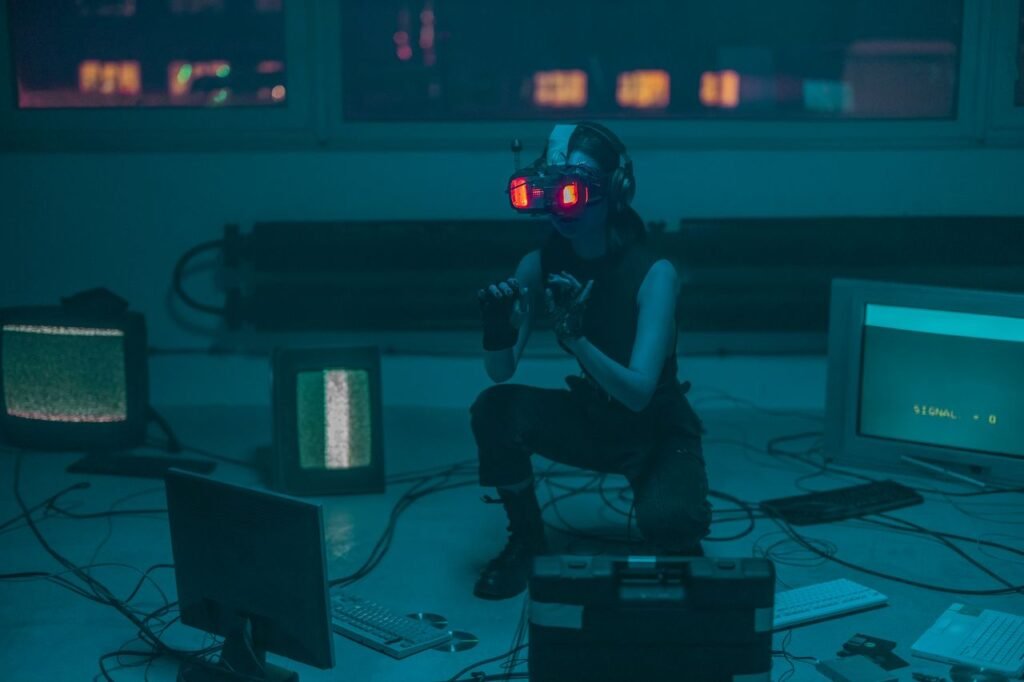
How Artificial Intelligence Is Changing the Future of Video Games
Artificial intelligence is becoming one of the most influential technologies in the gaming industry. For decades, video games have used basic forms of artificial intelligence to control enemies, create challenges, and make virtual worlds feel alive. However, recent advances in AI are taking gaming far beyond traditional scripted behavior.
Modern AI technologies can assist developers, create more responsive characters, personalize gameplay, generate content, improve testing, and potentially transform how players interact with virtual worlds.
As gaming hardware becomes more powerful and AI systems become more sophisticated, the relationship between players and games is likely to change significantly. Instead of experiencing completely predetermined environments, future players may interact with worlds that can adapt to their actions in real time.
What Is AI in Video Games?
Artificial intelligence in gaming refers to technologies that allow computer-controlled systems to make decisions, respond to players, or generate content.
Traditional game AI has been used for many years. Non-player characters, commonly called NPCs, can follow predefined rules that determine how they move and react.
For example, an enemy might detect a player, move toward them, attack, retreat, or search for another position.
These systems are effective, but they are generally based on predefined instructions.
Newer AI technologies can potentially make these systems more dynamic. Instead of following only a fixed set of behaviors, AI-powered systems can analyze situations and generate more varied responses.
This could make future games feel more unpredictable and responsive.
AI Has Been Part of Gaming for Decades
Although modern AI receives a lot of attention, artificial intelligence is not new to video games.
Early games used relatively simple systems to control enemies and opponents.
As technology improved, developers created increasingly sophisticated AI systems.
Strategy games, racing games, sports games, and action titles all use different forms of AI to control computer-controlled opponents.
The difference today is the increasing availability of advanced machine learning and generative AI technologies.
These tools can potentially process much larger amounts of information and create more complex responses than traditional scripted systems.
Smarter Non-Player Characters
One of the most exciting applications of AI is the development of smarter NPCs.
Traditional NPCs usually have a limited number of predefined responses.
For example, a character might say the same dialogue every time the player interacts with them.
AI could allow NPCs to respond more dynamically.
Characters might remember previous interactions, react differently to player decisions, or adjust their behavior based on events happening in the game world.
Imagine entering a virtual city where residents have their own routines, relationships, goals, and reactions.
Instead of feeling like background objects, NPCs could become active participants in the world.
This could make games feel significantly more alive.
AI-Generated Dialogue
Generative AI can also influence how characters communicate.
Traditional games require developers and voice actors to create large amounts of dialogue in advance.
AI systems could potentially generate responses based on the player’s situation.
For example, if a player helps an NPC during one mission, that character could later acknowledge the player’s actions.
Another player who behaves differently could receive a different response.
This could make conversations more personalized.
However, AI-generated dialogue also creates challenges involving quality, consistency, voice acting, copyright, and creative control. Developers will need to ensure that generated content fits the game’s story and maintains a consistent tone.
Personalized Gaming Experiences
AI could make games more adaptive.
Instead of giving every player exactly the same experience, AI systems could analyze how someone plays and adjust certain aspects of the game.
For example, a game might recognize that a player is struggling with a particular mechanic and adjust the difficulty.
Another player who performs exceptionally well might encounter more challenging opponents.
Personalization could also influence missions, recommendations, enemy behavior, and available content.
The result could be a game that feels different for each player.
Dynamic Difficulty
Difficulty is one of the most important aspects of game design.
If a game is too easy, players may become bored. If it is too difficult, players may become frustrated.
AI could help developers create more dynamic difficulty systems.
Instead of simply choosing “Easy,” “Normal,” or “Hard,” a game could continuously analyze player performance and adjust challenges.
A player who is struggling might receive subtle assistance, while a highly skilled player could face stronger opponents.
The challenge is to make these adjustments feel natural.
Players should still feel that their success comes from their own skills rather than the game secretly changing the rules.
AI and Procedural World Generation
AI could also change how game worlds are created.
Procedural generation has already been used in games to create environments, levels, maps, and other content automatically.
AI can potentially take this idea further by generating more complex environments based on specific rules or design goals.
Future games could potentially create unique locations as players explore.
A game might generate a new dungeon, landscape, quest, or encounter based on what the player has already experienced.
This could increase replayability because different players may encounter different content.
AI-Powered Game Development
AI is not only changing the games players experience. It is also changing how games are developed.
Game development can involve thousands of repetitive tasks.
AI-assisted tools can help developers with coding, testing, asset creation, documentation, localization, and other parts of production.
For example, developers may use AI tools to identify potential bugs or generate initial versions of certain assets.
This can help teams save time and focus more attention on creative decisions.
AI does not necessarily eliminate the need for developers. Instead, it can act as an additional tool that supports human creativity and productivity.
AI in Game Testing
Testing is one of the most time-consuming parts of game development.
Large games can contain countless interactions and possible bugs.
Human testers can explore these systems, but there are limits to how many situations they can manually test.
AI-powered testing systems can potentially simulate large numbers of player behaviors.
These systems could repeatedly test levels, menus, combat mechanics, and other game systems to identify problems.
Automated testing can help developers find issues earlier in the development process.
AI and Game Animation
Animation is another area where AI can have an impact.
Creating realistic character movement traditionally requires significant time from animators and developers.
AI-based systems can assist with generating or refining animations.
This could help characters move more naturally, particularly when responding to unusual situations.
AI could also make it easier to create different animations based on player interactions.
As technology improves, virtual characters may become more expressive and physically believable.
AI and Voice Technology
Voice technology is also developing rapidly.
AI-powered voice systems can potentially generate spoken dialogue for virtual characters.
This could allow games to include large amounts of dialogue without requiring every line to be recorded manually.
However, voice technology raises important questions about consent, ownership, authenticity, and the role of professional voice actors.
Game developers will need to establish responsible practices when using AI-generated voices.
Human performers and creators may continue to play an important role, particularly for major characters and emotionally important scenes.
AI and Open-World Games
Open-world games are particularly interesting from an AI perspective.
Large open worlds contain many characters, locations, quests, and systems.
AI could make these worlds more dynamic by allowing characters to respond to events rather than simply following fixed routines.
For example, an NPC could change their behavior after a major event in the game world.
Groups of characters could react differently depending on the player’s reputation or previous actions.
This could make open-world environments feel more like living ecosystems.
AI and Storytelling
AI could also influence interactive storytelling.
Traditional game stories usually follow carefully designed paths.
Although players may have choices, the possible outcomes are still largely determined by the developers.
AI could potentially create more flexible narratives.
A player’s actions might influence relationships, missions, dialogue, and future events in ways that are difficult to predict.
This could create stories that feel more personal.
However, storytelling requires strong creative direction. Completely uncontrolled AI-generated narratives could become inconsistent or lose emotional focus.
The most effective systems are likely to combine AI flexibility with carefully designed human storytelling.
AI and Multiplayer Gaming
AI can also support multiplayer games.
AI systems can help detect cheating, identify unusual player behavior, moderate harmful content, and improve matchmaking.
AI-powered moderation could help gaming communities become safer by identifying inappropriate behavior more efficiently.
AI can also potentially create training opponents that behave more realistically.
New players could practice against adaptive AI opponents before entering competitive multiplayer matches.
AI-Generated Game Content
Generative AI could make it easier to produce certain types of game content.
Developers may use AI to assist with:
- Concept ideas
- Environmental designs
- Dialogue drafts
- Character concepts
- Sound effects
- Music experimentation
- Testing scenarios
- Level ideas
- Text localization
However, AI-generated content still requires human review.
Developers need to ensure that content is appropriate, consistent, original, and compatible with the game’s artistic direction.
Challenges and Concerns
The use of AI in gaming is not without controversy.
One major concern is the potential impact on creative jobs.
Artists, writers, voice actors, programmers, and other professionals may worry that companies could use AI to reduce production costs.
There are also concerns about copyright and the data used to train AI systems.
Another issue is quality.
AI-generated content can sometimes be repetitive, inaccurate, or inconsistent.
Developers therefore need strong review processes.
The gaming industry must find a balance between technological innovation and respect for the people whose creative work makes games possible.
AI Could Make Games More Accessible
AI may also improve accessibility.
Intelligent systems could help customize controls, generate subtitles, translate dialogue, describe visual information, or adapt gameplay.
Players with different abilities could potentially receive more personalized gaming experiences.
AI-powered translation could also help games reach international audiences more quickly.
These applications could make gaming more inclusive and allow more people to enjoy interactive entertainment.
The Future of AI in Gaming
The future of AI-powered gaming is difficult to predict, but the potential is enormous.
Games could eventually feature characters that remember interactions, worlds that adapt to player behavior, missions that change dynamically, and stories that respond to individual decisions.
Instead of playing through exactly the same experience as everyone else, players could experience personalized versions of the same game world.
AI could also make game development more efficient, allowing smaller teams to create larger and more ambitious projects.
However, technology alone will not determine the future.
The best games will still need creativity, strong design, memorable characters, compelling stories, and enjoyable gameplay.
Will AI Replace Game Developers?
AI is unlikely to completely replace human game developers.
Game development is a highly creative process that involves vision, artistic direction, storytelling, programming, design, sound, and collaboration.
AI can assist with many tasks, but humans are still responsible for deciding what kind of experience they want to create.
The future is more likely to involve collaboration between humans and AI.
Developers can use AI to automate repetitive work while spending more time on creative decisions.
This could potentially allow teams to experiment with new ideas and produce content more efficiently.
Conclusion
Artificial intelligence is changing the future of video games in ways that could fundamentally reshape the industry.
From smarter NPCs and adaptive difficulty to AI-assisted development, procedural world generation, personalized stories, advanced animation, and automated testing, AI is becoming an increasingly important part of gaming.
The technology also presents challenges involving creativity, copyright, employment, quality, and responsible use. These issues will need to be addressed as AI becomes more deeply integrated into game development.
Ultimately, AI should not be viewed simply as a replacement for human creativity. Its greatest potential may come from helping developers build richer, more responsive, and more personalized gaming experiences.
The future of gaming could feature virtual worlds that react to players in ways that feel more natural than ever before. As AI technology continues to develop, the line between a programmed game and a living digital world may become increasingly difficult to distinguish.