
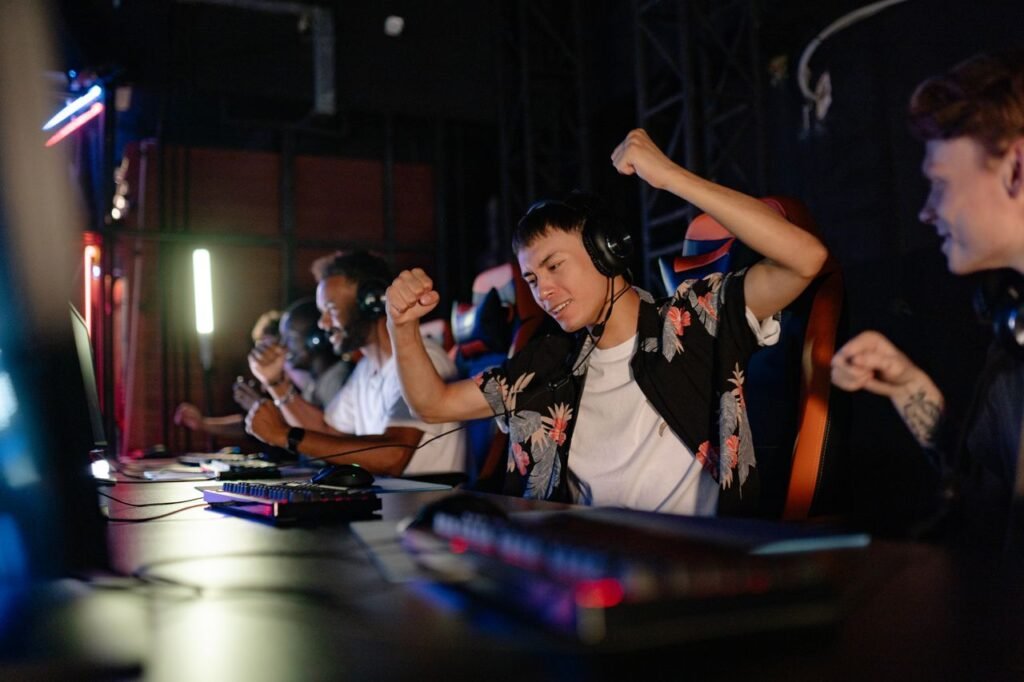
Best Gaming Tips and Tricks to Improve Your Skills
Becoming a better gamer is not always about having the most expensive gaming PC, the latest console, or the best accessories. While good hardware can improve your experience, real improvement comes from practice, awareness, strategy, and understanding how to learn from mistakes.
Whether you enjoy competitive shooters, racing games, strategy titles, RPGs, sports games, or multiplayer adventures, developing the right habits can help you perform better and enjoy gaming more.
Improving your gaming skills is a gradual process. You will not become an expert overnight, but with consistent practice and the right approach, you can make noticeable progress.
Here are some of the best gaming tips and tricks to help you improve your skills.
1. Choose a Game and Learn It Properly
One of the easiest ways to improve is to focus on a particular game instead of constantly switching between different titles.
Every game has its own mechanics, maps, controls, strategies, and systems. Spending more time with one game allows you to understand how everything works.
Learn the basic mechanics first. Understand movement, weapons, abilities, objectives, maps, and character roles.
Once you have mastered the fundamentals, you can begin working on advanced strategies.
This does not mean you can never play other games. However, if your goal is to become highly skilled at a particular title, consistent practice is extremely valuable.
2. Master Your Controls
Good control over your keyboard, mouse, or controller can make a major difference.
Take time to learn your control layout and make sure the important actions are easy to access.
For PC gaming, mouse sensitivity is especially important in games that require precise aiming. Extremely high sensitivity can make small movements difficult to control, while very low sensitivity may make it harder to turn quickly.
There is no perfect sensitivity setting for everyone.
Experiment with different settings and choose a configuration that feels comfortable and consistent.
Controller players should also explore sensitivity, button layouts, dead zones, and other available settings.
The goal is to create controls that allow you to react naturally without constantly thinking about which button to press.
3. Practice Your Aim
For shooting games, aim is one of the most important skills to develop.
Good aim requires accuracy, reaction speed, tracking ability, and muscle memory.
Instead of only practicing during real matches, consider using training modes or aim-training exercises when available.
Start with basic accuracy. Focus on hitting targets consistently rather than simply moving your crosshair quickly.
Once your accuracy improves, practice tracking moving targets and switching between different targets.
You should also learn to keep your crosshair positioned where an opponent is most likely to appear. This reduces the amount of movement required when an enemy enters your field of view.
4. Learn the Maps
Map knowledge can provide a major advantage in competitive games.
Learn important locations such as:
- Common enemy positions
- Choke points
- Safe areas
- High-ground locations
- Objective locations
- Cover
- Alternative routes
- Spawn areas
Understanding the map allows you to make better decisions before an opponent even appears.
Experienced players often predict where enemies are likely to move based on the current situation.
The more familiar you become with a map, the less attention you need to spend figuring out where you are going. This allows you to focus more on opponents and strategy.
5. Improve Your Game Sense
Game sense is the ability to understand what is happening and predict what may happen next.
It develops naturally through experience, but you can improve it deliberately.
Ask yourself questions during matches:
- Where are my teammates?
- Where could the enemy be?
- What objectives are important right now?
- What resources does the enemy have?
- What is the safest route?
- What might the opponent do next?
Instead of reacting to everything at the last second, try to anticipate situations.
Good game sense can sometimes compensate for imperfect aim or slower reactions.
6. Watch Professional Players
Watching skilled players can teach you techniques that may take a long time to discover on your own.
Professional players often demonstrate advanced movement, positioning, communication, strategy, and decision-making.
When watching gameplay, do not focus only on exciting moments.
Pay attention to why the player makes certain decisions.
Ask yourself:
Why did they move there?
Why did they choose that weapon or ability?
Why did they avoid a particular fight?
How did they position themselves before an opponent appeared?
Understanding the reasoning behind a decision is more valuable than simply copying a player’s actions.
7. Review Your Own Gameplay
One of the most effective ways to improve is to analyze your own matches.
If possible, record your gameplay and watch it later.
During the review, identify mistakes without becoming overly negative.
Look for patterns.
Maybe you frequently enter fights without enough information. Perhaps you reload at dangerous moments, lose track of objectives, or position yourself too aggressively.
Once you identify a repeated mistake, focus on fixing that specific problem during your next sessions.
This creates a simple improvement cycle:
Play → Review → Identify Mistakes → Practice → Play Again
8. Don’t Play When You Are Frustrated
Gaming while frustrated can negatively affect decision-making.
After several losses, players may start making aggressive decisions, rushing unnecessarily, or blaming teammates.
This is commonly known as tilting.
If you notice that you are becoming increasingly frustrated, take a short break.
Step away from the game, drink some water, stretch, or do something else for a few minutes.
Returning with a clear mind can help you play more effectively.
Remember that losing matches is part of improving.
9. Communicate With Your Team
In team-based games, communication is essential.
Good communication does not mean talking constantly.
Useful communication is clear, short, and relevant.
Tell teammates important information such as enemy positions, objectives, resources, or strategic plans.
Avoid unnecessary arguments or negative comments.
Positive communication can improve teamwork and help everyone make better decisions.
A team with average individual players can sometimes outperform a team of highly skilled players if it communicates effectively.
10. Understand Your Role
If you play team-based games, understand your role.
Different games may include roles such as:
- Attacker
- Defender
- Support
- Tank
- Healer
- Scout
- Strategist
Each role has different responsibilities.
A common mistake is trying to do everything yourself.
If you are playing a support role, for example, your job may be to help teammates rather than chase every elimination.
Understanding your role helps you make better decisions and improves team coordination.
11. Learn From Your Losses
Losing can be frustrating, but it can also provide valuable information.
Instead of thinking only about the final score, consider why you lost.
Were you making poor decisions?
Did you misunderstand the opponent’s strategy?
Did your team fail to communicate?
Did you struggle with a particular mechanic?
Every loss can reveal something that needs improvement.
Successful gamers are not players who never lose. They are players who learn from losses and gradually reduce their mistakes.
12. Improve Your Reaction Time
Reaction time can be important in fast-paced games.
You can improve your responsiveness through regular gameplay and targeted exercises.
Aim trainers, rhythm games, movement drills, and fast-paced practice modes can help develop coordination.
However, reaction time is only one part of gaming performance.
Positioning and anticipation can often be more valuable than simply reacting quickly.
If you already know where an opponent is likely to appear, you do not need extraordinary reaction speed to respond effectively.
13. Optimize Your Gaming Setup
Your gaming environment can also affect performance.
Make sure your monitor is positioned comfortably and that your mouse or controller is easy to use.
For competitive gaming, a responsive display and reliable peripherals can make the experience more consistent.
You should also keep your gaming area comfortable.
A good chair, proper desk height, adequate lighting, and a comfortable posture can help you stay focused during longer sessions.
You do not necessarily need expensive equipment. A simple, comfortable setup can be highly effective.
14. Keep Your Hardware Updated
While expensive hardware is not required to become a skilled gamer, maintaining your equipment can help.
Keep your operating system, graphics drivers, and games updated when appropriate.
Make sure your storage has enough free space and that your system is not overheating.
For PC players, regularly checking temperatures and performance can help identify problems that may cause stuttering or crashes.
A stable gaming environment allows you to focus on improving your skills rather than dealing with technical problems.
15. Learn the Meta
Many competitive games have a constantly changing “meta.”
Meta refers to strategies, characters, weapons, builds, or tactics that are currently considered highly effective.
Game updates can change the balance between different options.
Learning the current meta can help you understand what strong players are using and why.
However, do not blindly follow the meta.
A strategy may be powerful but unsuitable for your personal playstyle.
Experiment with different options and find what works best for you.
16. Practice With a Purpose
Simply playing for hours does not guarantee improvement.
Focused practice is usually more effective.
Before starting a gaming session, choose one skill to work on.
For example:
Today: Improve positioning.
Tomorrow: Practice aim.
Next session: Work on communication.
This gives your practice a clear purpose.
You can then measure whether you are improving.
Focused practice is particularly useful for competitive players who want to make steady progress.
17. Take Regular Breaks
Long gaming sessions can reduce concentration.
After playing for a long time, reaction speed and decision-making may become worse.
Taking regular breaks can help you maintain focus.
Stand up, stretch, rest your eyes, and return when you feel refreshed.
Breaks are not a sign of weakness. They are part of maintaining consistent performance.
18. Stay Patient
Skill development takes time.
You may improve quickly during the first few weeks and then reach a period where progress feels slower.
This is normal.
Instead of comparing yourself constantly with professional players, compare your current performance with your previous performance.
Ask:
Am I making fewer mistakes?
Is my aim improving?
Do I understand the maps better?
Am I making smarter decisions?
Small improvements eventually add up.
19. Play Different Game Modes
Trying different game modes can help you develop different skills.
Competitive modes can teach decision-making under pressure, while casual modes can provide a safer environment for experimentation.
Training modes are useful for practicing mechanics without worrying about winning or losing.
Playing different modes can also prevent gaming from becoming repetitive.
20. Have Fun While Improving
Finally, remember why you started gaming.
Improving your skills is rewarding, but gaming should also be enjoyable.
If you turn every session into a stressful competition, you may lose interest.
Celebrate small achievements.
Maybe you improved your accuracy, learned a new map, reached a higher rank, or finally mastered a difficult mechanic.
Progress does not always have to mean winning every match.
Conclusion
Improving your gaming skills requires more than simply spending more hours playing. The most effective approach combines focused practice, game knowledge, good communication, smart decision-making, and regular self-review.
Master your controls, learn the maps, practice important mechanics, watch skilled players, analyze your mistakes, and maintain a positive mindset.
It is also important to remember that every gamer improves at a different pace. You do not need expensive equipment or professional-level talent to become better.
With patience and consistent practice, you can develop stronger gaming skills and enjoy your favorite games at a higher level. Whether your goal is to climb the competitive rankings or simply perform better with friends, these gaming tips can give you a solid foundation for long-term improvement.